

Meet Capt. Bruce: The Sailor, the Craftsman, and the Captain.
Some people find their calling early in life.
Capt Bruce certainly did, though at the time he would never realize what that first boat purchase would lead to.
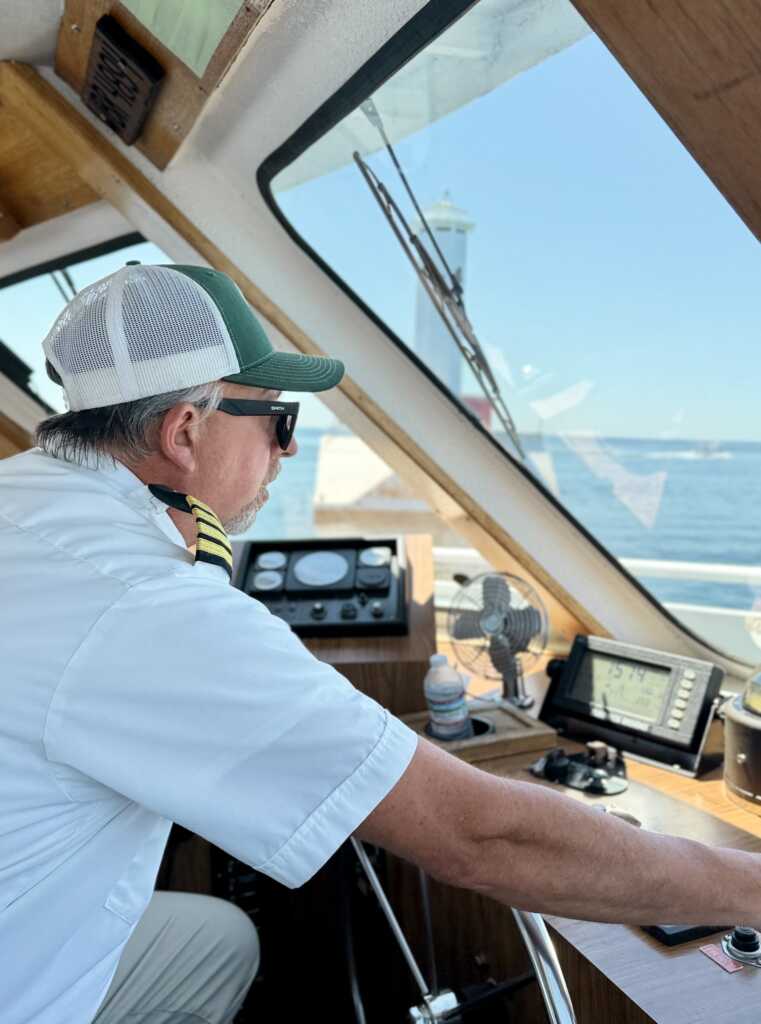
Now in his fifth season with Arnold Transit Company, you can find Capt Bruce at the helm of one of the fast ferries or classic ferries departing from St. Ignace. But long before he stood in the pilothouse of an Arnold vessel, he was just a kid growing up in Fredonia, New York, along the shores of Lake Erie.
His boating career didn’t begin with a shiny new runabout.
It began with a 14-foot jon boat that he bought at age 12…for 25 cents.
Not a quarter.
Twenty-five pennies.
After buying the boat, he went to work saving enough money for the 1947 Mercury 7.5 horsepower outboard that would power this mighty vessel.
It was also around this time that another passion quietly took hold.
Growing up along Lake Erie it was a common sight to see sailboats on horizon and in the marinas. For Bruce, though, he’d wonder where they were headed, where were they returning from. Before long, curiosity turned into obsession.
By age 16, he had built his own 12-foot wooden sailboat.
He sailed it until leaving for the U.S. Navy. After he was gone, his dad decided there was simply too much “stuff” piling up around the house.
The sailboat didn’t survive.
His father burned it.
Bruce can chuckle about it today “a sea burial on land.”
It wouldn’t be the last wooden boat to capture his imagination.
At 19, Bruce spotted an old 20-foot Cruiser Inc. cuddy cabin sitting quietly in a marina. After a little wheeling and dealing, he convinced the owner to part with it…
…for $100.
His appreciation for boats, especially classic wooden boats, only continued to grow.
That passion followed him into the U.S. Navy, where he served as a Quartermaster for Navigation aboard the USS Opportune (ARS), an auxiliary rescue and salvage vessel. Navigation, charts, bearings, and life at sea became part of everyday life.
After military service came family life and a career that lasted more than 20 years in the timber industry while also running a family grape farm with his wife Sue as this side.
But boats were never far away.
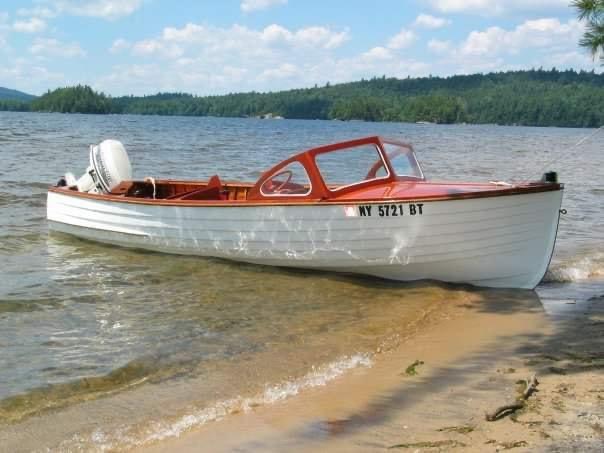
Woodworking became more than a hobby. Bruce spent decades restoring boats, crafting parts, and taking on projects for fellow boat owners. His own collection eventually included three beautifully restored Lyman boats—a 1952 18-foot Islander, a 1953 13-foot rowboat, and a 1958 18-foot Outboard Runabout.
Still…
Those sailboats on the horizon had never really left his mind.
It was during this time that they sold their family farm and found themselves living in a downtown neighborhood, away from the acres of land. It was a time of adjustment, to say the least.
Everyone deals with change differently, and for Bruce, the best way to recalibrate and set his bearing straight was…yes, a boat.
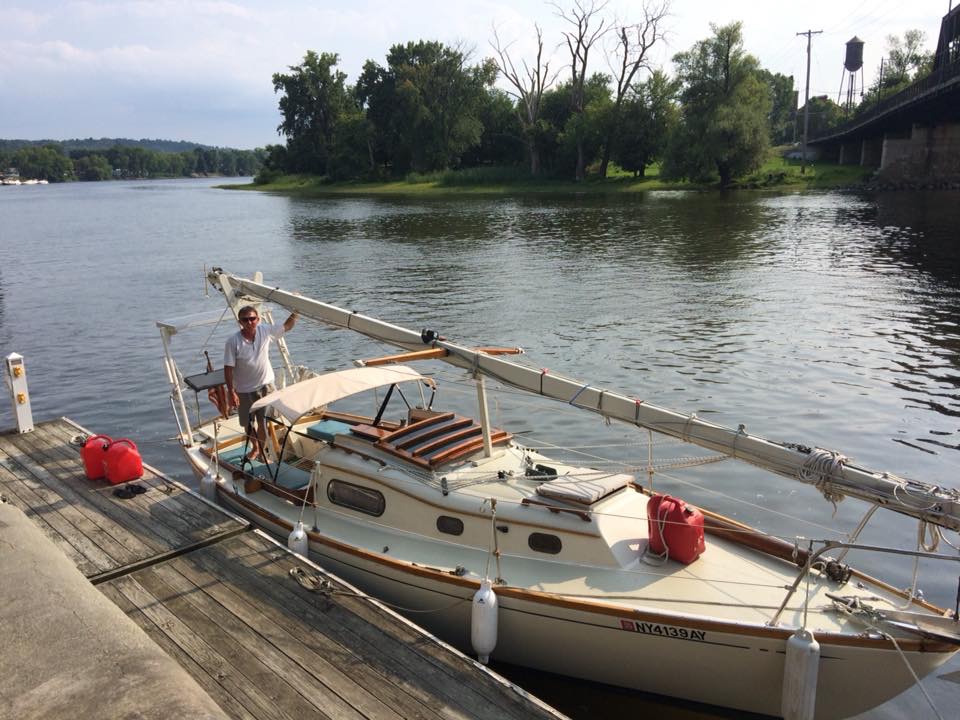
He bought a 1961 26-foot Seafarer—a fiberglass sailboat with wooden spars—and spent a year and a half restoring her.
Then, with the support from his wife, he pointed the bow south.
Alone.
His destination Key West.
These are the kinds of things Jimmy Buffett wrote about.
The voyage covered roughly 2,200 nautical miles over four and a half months.
Anyone who has spent time on the water knows that solo sailing isn’t simply about navigating weather or keeping a boat moving.
It’s about navigating yourself.
Long stretches of solitude have a way of revealing what you’re really made of. The confidence, patience, and perseverance required can’t be taught—they’re earned, mile after mile. Night after night. Storm after storm.
Upon successfully reaching Key West, he’d continue to enjoy life in the lower latitudes for a bit longer while living aboard. But as it happens with chapters, this one had come to an end and it was time to head north, and home.
Not long after returning home, Bruce faced an even greater journey.
Cancer.
For the next year and a half, he battled.
Most people would assume a life-changing illness is what would inspire someone to take a solo sailing adventure afterward.
Bruce’s story unfolded in reverse.
Maybe that’s exactly how it was supposed to happen.
Perhaps that voyage to Key West gave him something far more valuable than memories. Maybe it proved, to himself, that he could endure far more than he ever imagined.
After beating cancer, Bruce decided it was finally time to pursue the dream he’d carried since childhood.
He wanted to make a living on the water.
In October 2021, he began training for his U.S. Coast Guard license, earning his 100-ton Master’s license the following spring.
While searching for his first captain’s job, he stumbled across something unexpected.
The ferry industry.
The Straits of Mackinac.
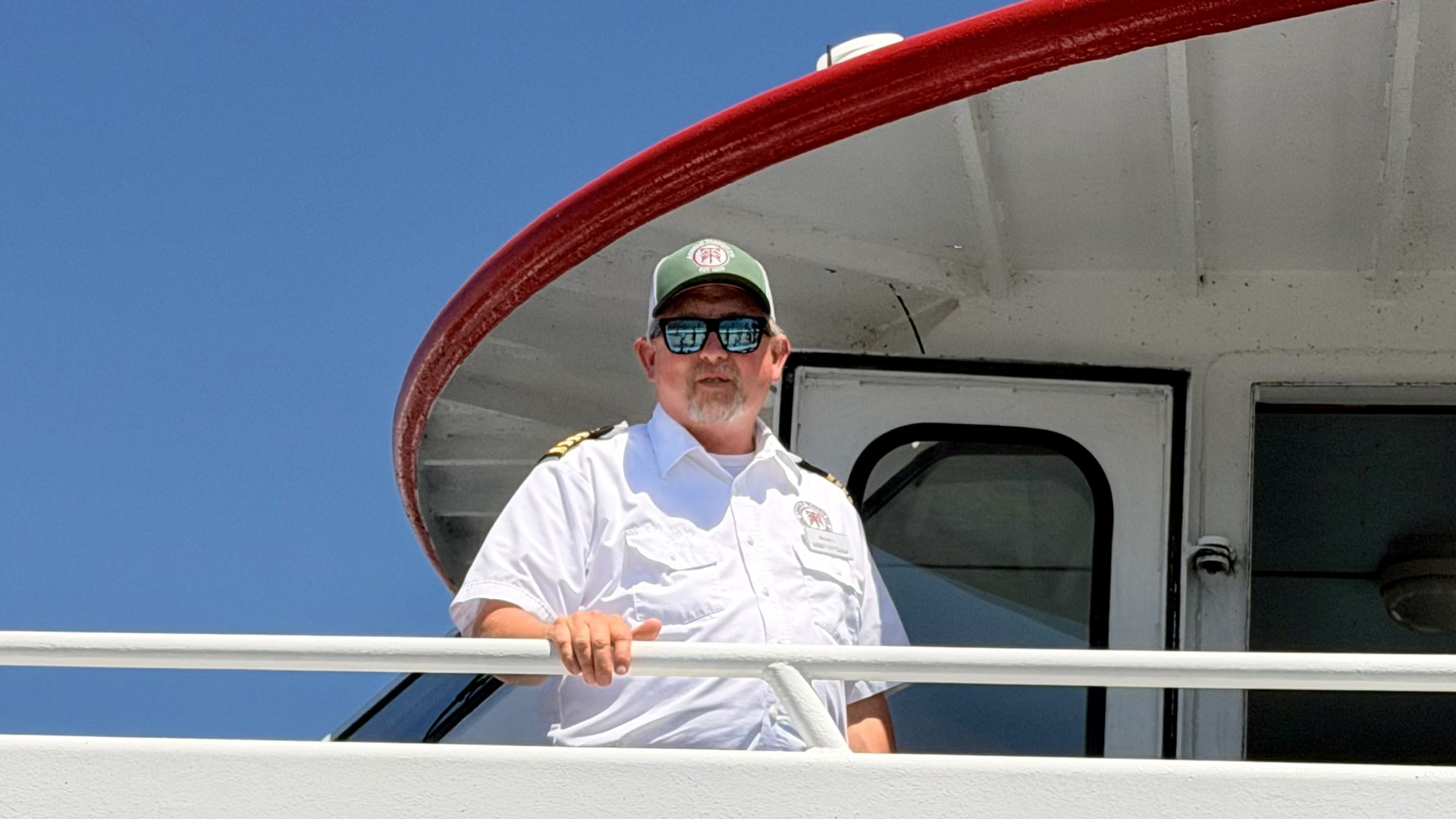
Bruce was hired first as a deckhand, learning the operation from the decks up before earning his Arnold captain’s bars in June 2022.
Today, passengers know him as one of Arnold’s captains.
His coworkers know him as something more.
Thanks to decades of woodworking experience, Bruce has helped restore portions of the pilothouses aboard Arnold’s beloved Classic fleet, preserving the craftsmanship that makes these vessels unlike anything else on the Great Lakes.
It’s fitting, really.
A man who spent his life restoring wooden boats now helps preserve some of the most iconic passenger vessels on the Great Lakes.
Ask Bruce what he loves most, and it isn’t difficult to understand why he’s here.
The Great Lakes.
Classic boats.
Working with his hands.
Being on the water.
Sometimes the longest journeys don’t lead you away from home.
Sometimes they lead you exactly where you were always meant to be.
Oh, and by his side here in the Straits is his wife, Sue, who you’ll also find at Arnold managing group sales, overseeing the St. Ignace ferry terminals, and doing her best to keep her husband from adding yet another boat to his personal collection.